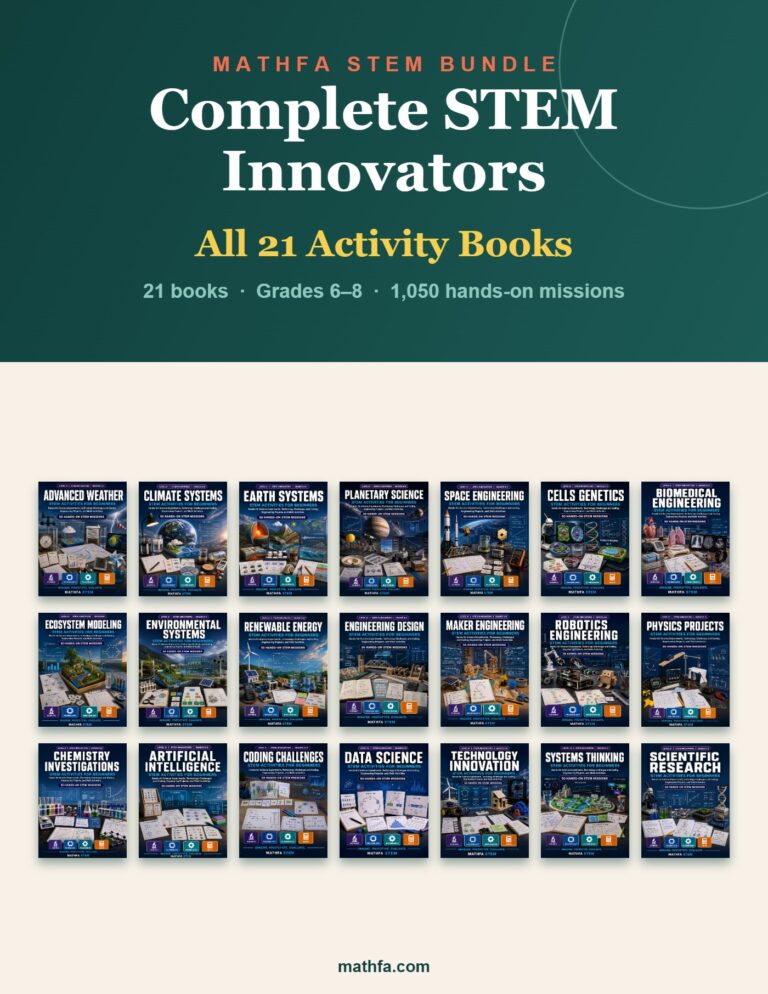
Complete STEM Innovators Bundle – All 21 STEM Activity Books for Grades 6–8
Original price was: $398.79.$238.99Current price is: $238.99.
Add to cart
$18.99
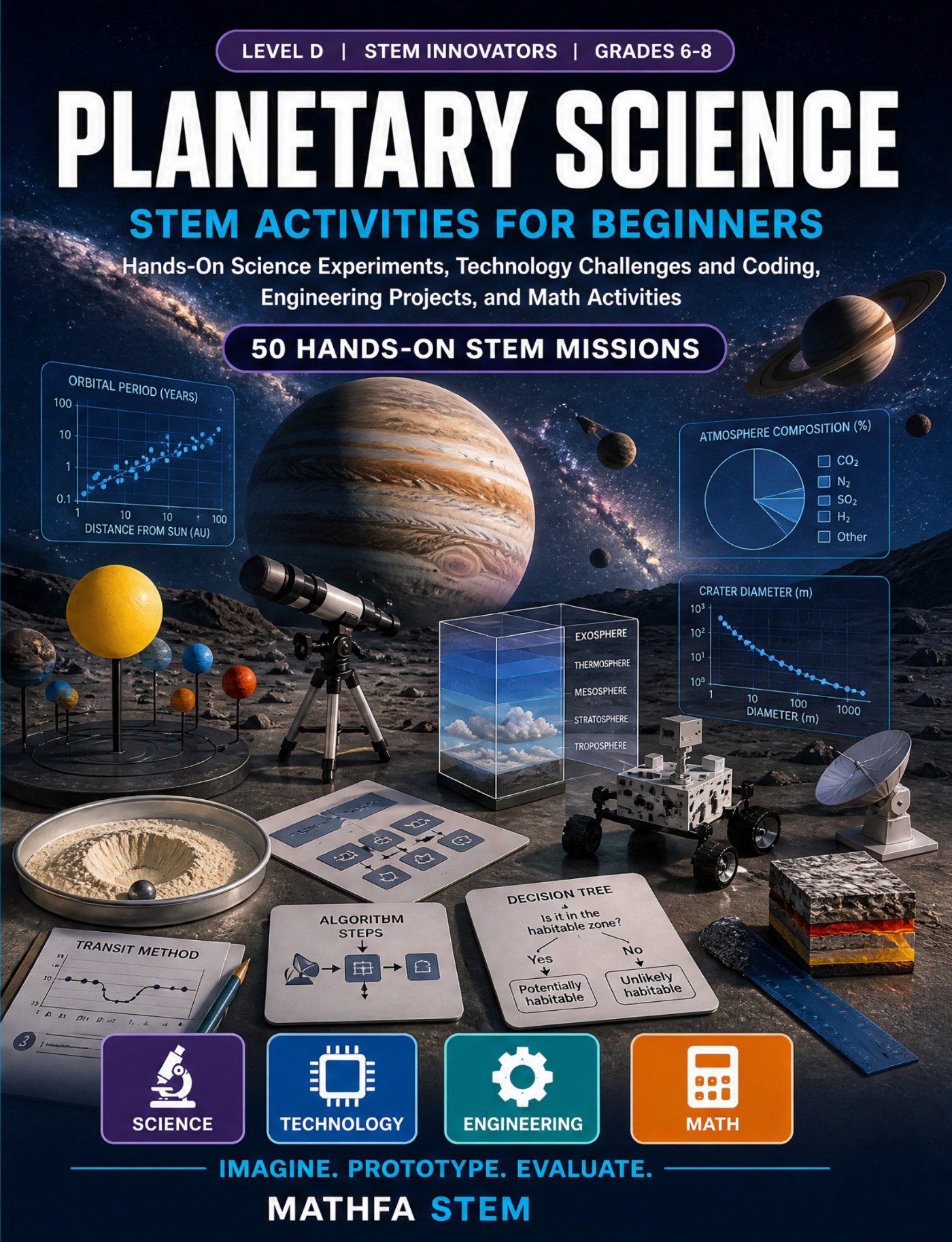
Level D “Innovators” of the Mathfa STEM series: 50 two-page planetary science missions for ages 11–13, from The Solar System & Its Worlds to Exploration & Design. Instant printable PDF. Get your copy now.
Help your middle-schooler think like a planetary scientist. Planetary Science STEM Activities for Beginners packs 50 two-page missions into one printable 124-page PDF — each with a Look & STEM Idea page, a Try & Draw page, a mission goal and a materials list — for Grades 6–8.
The book moves through seven sections: The Solar System & Its Worlds (8 missions, from Mapping the Solar System to Design a Planetary Data Card), Gravity, Orbits & Kepler (7 missions, from Weight on Other Worlds to Design an Orbit Investigation), Craters & Impacts (7 missions, from What Is an Impact Crater? to Design an Impact Investigation), Planetary Atmospheres (7 missions, from What Is an Atmosphere? to Design an Atmosphere Investigation), Surfaces, Geology & Volcanism (7 missions, from Reading a Planet’s Surface to Design a Surface Investigation), Exoplanets & Habitability (7 missions, from Worlds Around Other Stars to Design an Exoplanet Investigation) and Exploration & Design (7 missions, from Why We Send Robots to Present a Complete Planetary Study). Every section opens with a mission plan, and the book ends with For Grown-Ups notes and a Certificate of Discovery for finishing all 50 missions.
Grade 6–8 students (ages 11–13); parents who want screen-light, purposeful STEM projects; teachers and homeschool families who need ready-made missions; and STEM clubs looking for investigations that end in something students can show.
Let students read the STEM idea and predict before they build or measure. Encourage them to record every result, even the surprising ones, and to explain what the evidence shows. Revisit a mission after finishing a section — improving a first design is where much of the learning happens.
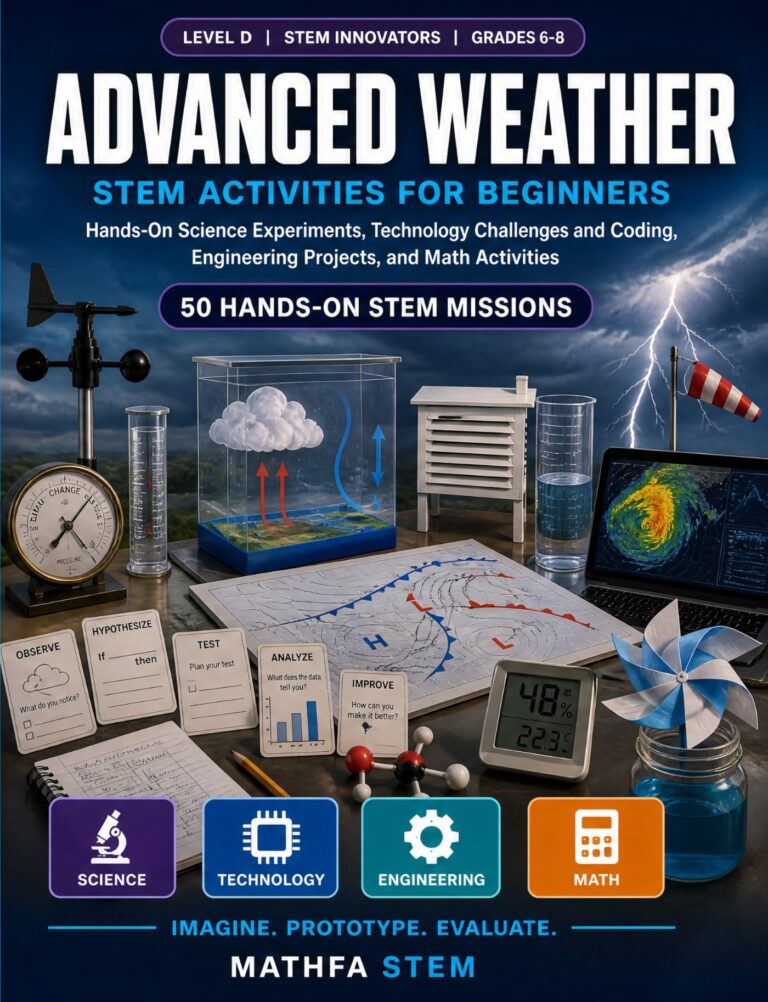
For background on middle-school science and engineering practices, see the Next Generation Science Standards; for real-world planetary science data and careers, visit the NASA. On Mathfa, explore the Mathfa STEM hub, try Advanced Weather STEM Activities for Beginners, or browse the full Mathfa library.
Grades 6–8, ages 11–13. It is Level D (“Innovators”) of the four-level Mathfa STEM series.
Calculator, ruler, measuring tape, shallow tray, soft impactors, balance, cool LED, modeling clay, graph paper or spreadsheet, and notebook. Each mission lists exactly what it needs on its Try & Draw page.
50 two-page missions across 7 sections, plus For Grown-Ups notes and a Certificate of Discovery.
No. The sections build step by step, and every mission starts with a Look & STEM Idea page that explains the idea before the hands-on work.
A printable 124-page PDF, ready to download as soon as your order is complete. Print the missions you need or work from a tablet.
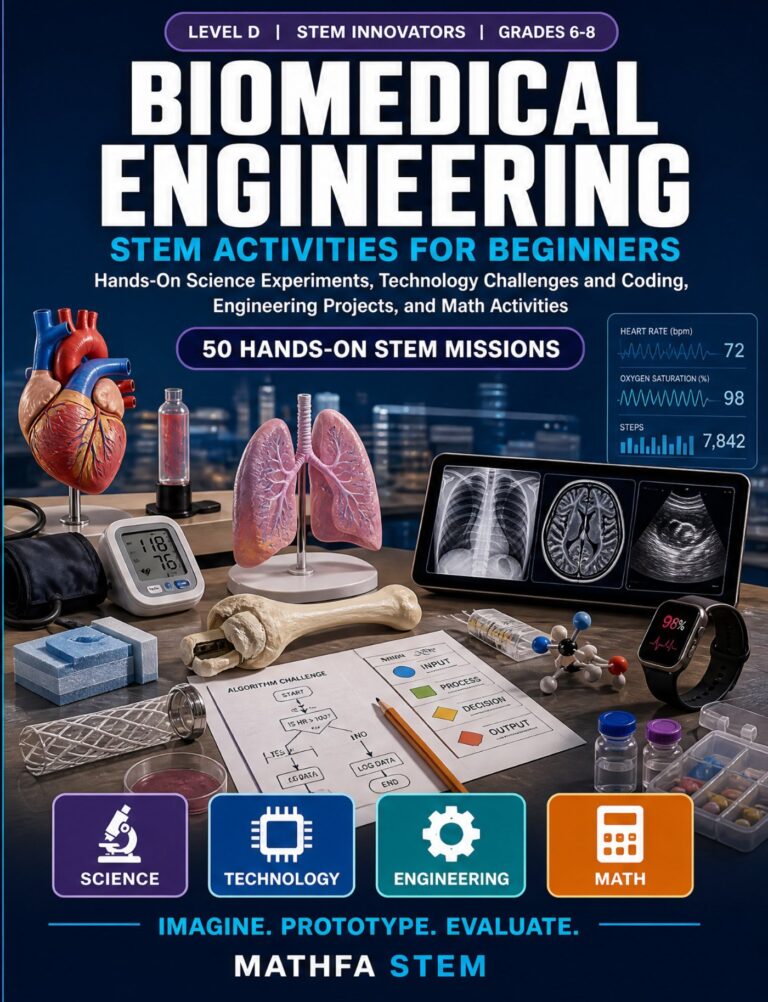
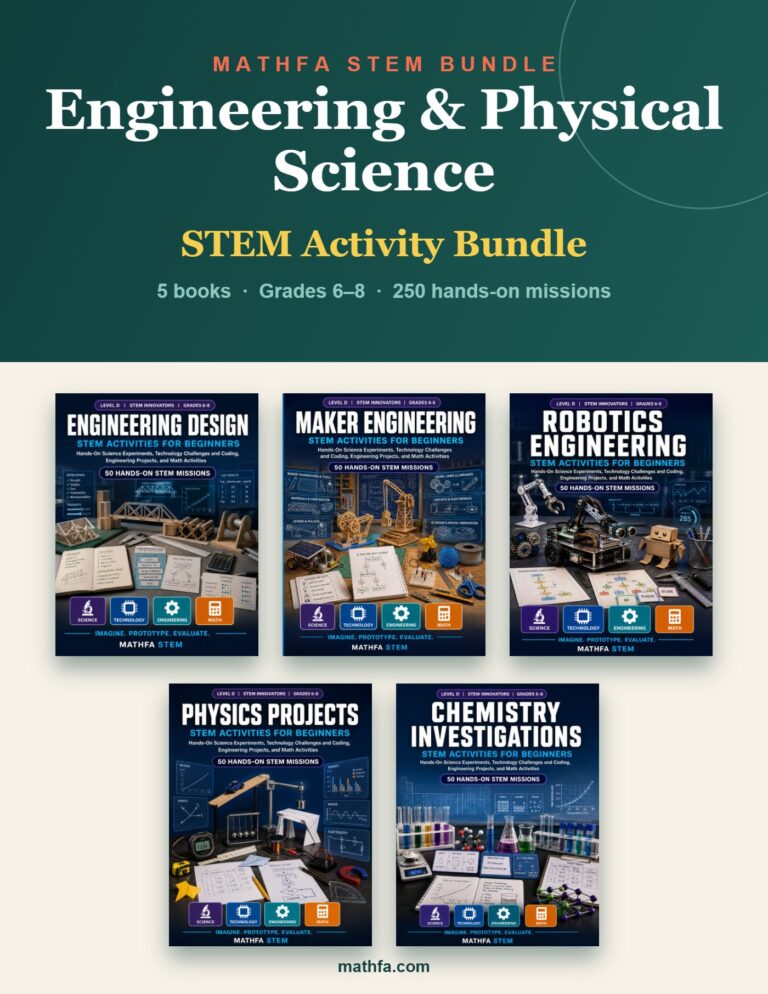
This book is part of a bundle
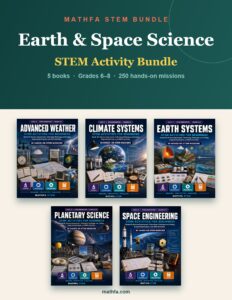
Earth & Space Science STEM Bundle
Get all 5 books and save 31%.
Original price was: $94.95.$65.99Current price is: $65.99.
Reviews
There are no reviews yet.