Climate Systems STEM Activities for Beginners – 50 Hands-On Missions for Grades 6–8
$18.99
Add to cart
$18.99
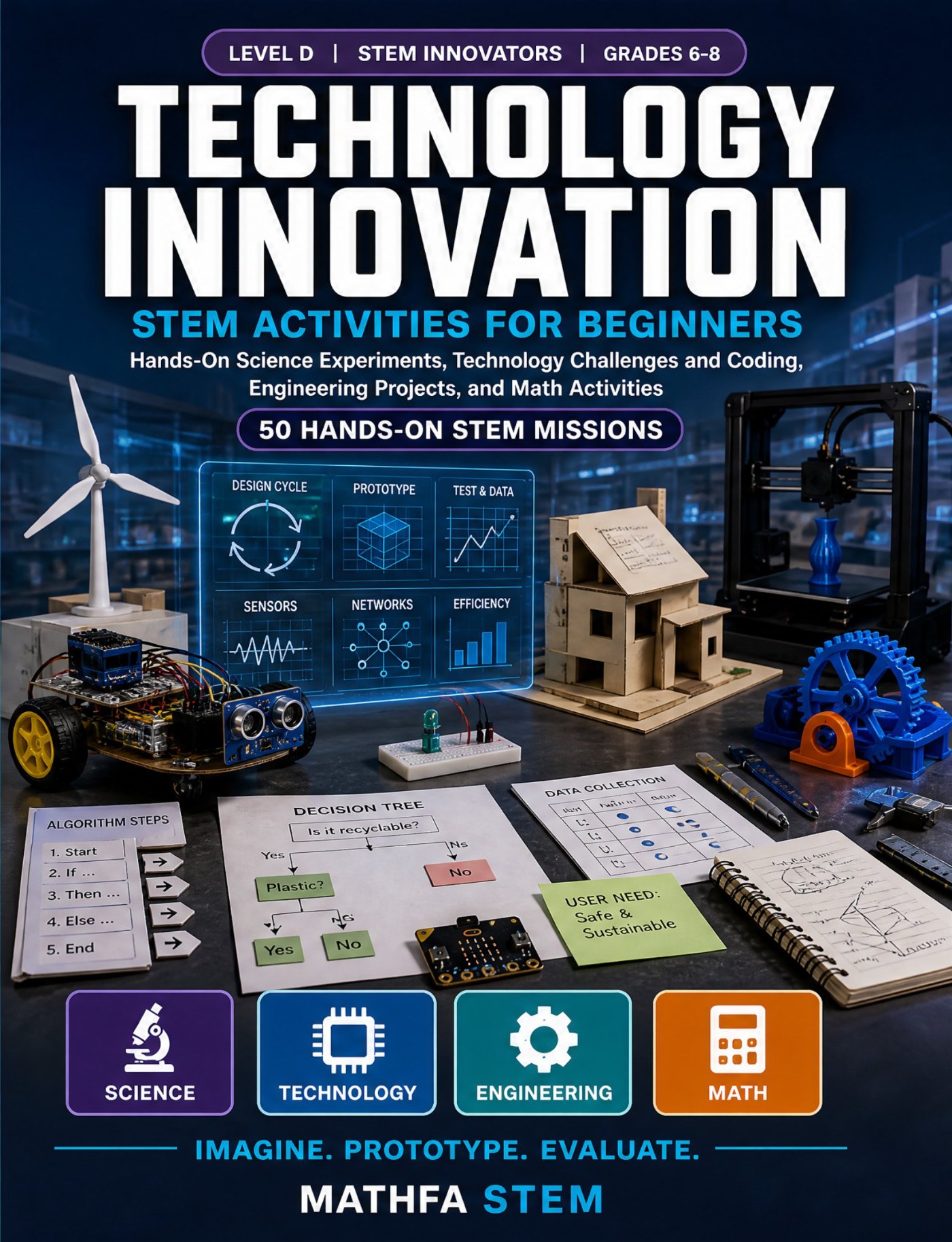
A hands-on technology and innovation activity book for Grades 6–8: 50 two-page missions across 7 sections with mission goals, materials lists and step-by-step Try & Draw pages. Download your copy today.
Technology Innovation STEM Activities for Beginners turns middle-school curiosity into real technology and innovation skills. Built for Grades 6–8 (ages 11–13), it offers 50 two-page missions where students investigate, measure, analyze and explain — “Imagine, Prototype, Evaluate Like an Innovator.”
The book moves through seven sections: What Is Technology? (8 missions, from What Counts as Technology? to Map the Technology Around You), The Innovation Process (7 missions, from The Innovation Cycle to Design a Pitch for Your Invention), Design Thinking & Human Needs (7 missions, from The Five Stages of Design Thinking to Design for Everyone), Communication & Computing (7 missions, from Everything Is Bits to Design a Simple User Interface), Sensors, Automation & Robotics (7 missions, from What a Sensor Does to Design a Smart Device), Emerging Technologies (7 missions, from How 3D Printing Works to Predicting the Next Big Thing) and Ethics & Design Challenges (7 missions, from Weighing Benefits and Costs to Present Your Innovation). Every section opens with a mission plan, and the book ends with For Grown-Ups notes and a Certificate of Discovery for finishing all 50 missions.
Middle-school students who want hands-on technology and innovation, parents looking for purposeful STEM projects at home, and grade 6–8 teachers, homeschool families and STEM clubs who need ready-to-use missions with clear goals and materials lists.
Work one two-page mission at a time. Start with the Look & STEM Idea page: study the image, answer the look-closely question and read the idea. Then turn to Try & Draw: check the time and difficulty, gather the listed materials, follow the steps and record your results. Finish each section before moving on, and save the design challenges for when the core ideas feel solid.
For background on middle-school science and engineering practices, see the Next Generation Science Standards; for national education guidance, visit the U.S. Department of Education. On Mathfa, explore the Mathfa STEM hub, try Artificial Intelligence STEM Activities for Beginners, or browse the full Mathfa library.
Grades 6–8, ages 11–13. It is Level D (“Innovators”) of the four-level Mathfa STEM series.
Paper, cardboard, tape, string, rulers, sticky notes, a design journal, graph paper, and a calculator. Check each mission before starting. Each mission lists exactly what it needs on its Try & Draw page.
50 two-page missions across 7 sections, plus For Grown-Ups notes and a Certificate of Discovery.
No. The sections build step by step, and every mission starts with a Look & STEM Idea page that explains the idea before the hands-on work.
A printable 124-page PDF, ready to download as soon as your order is complete. Print the missions you need or work from a tablet.
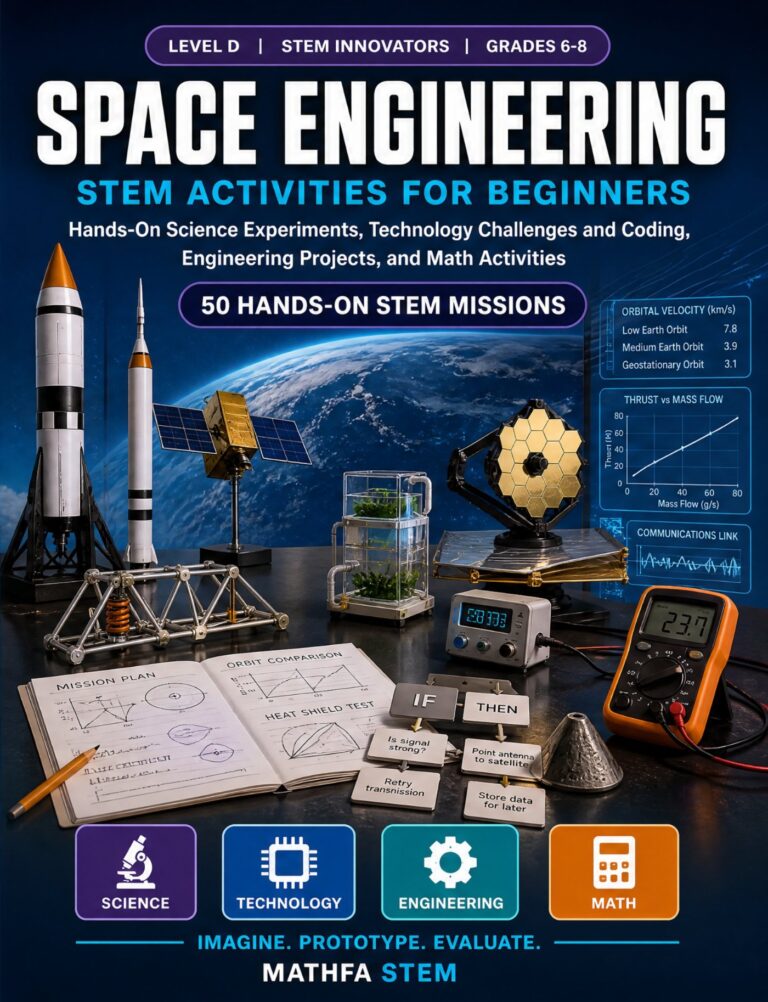
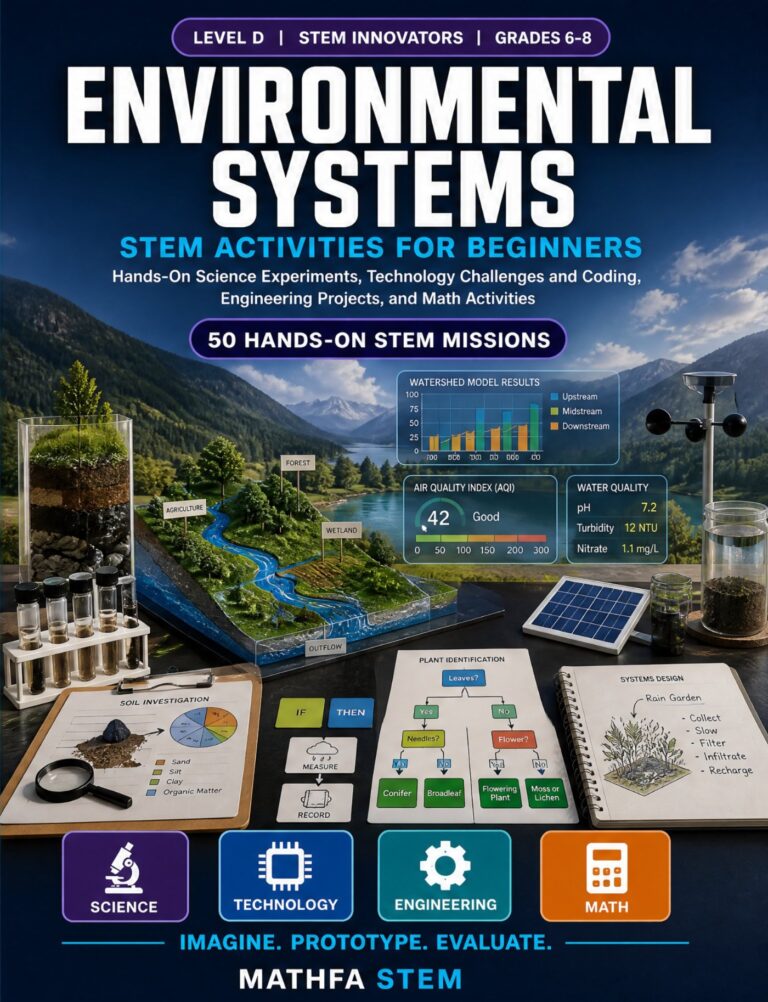
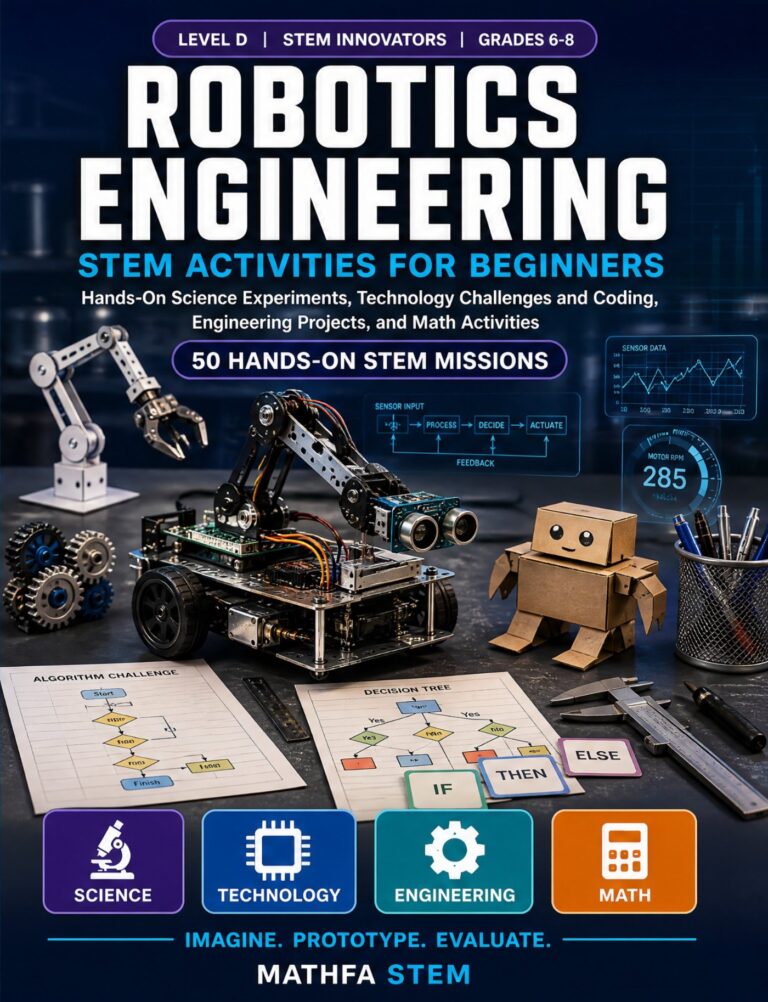
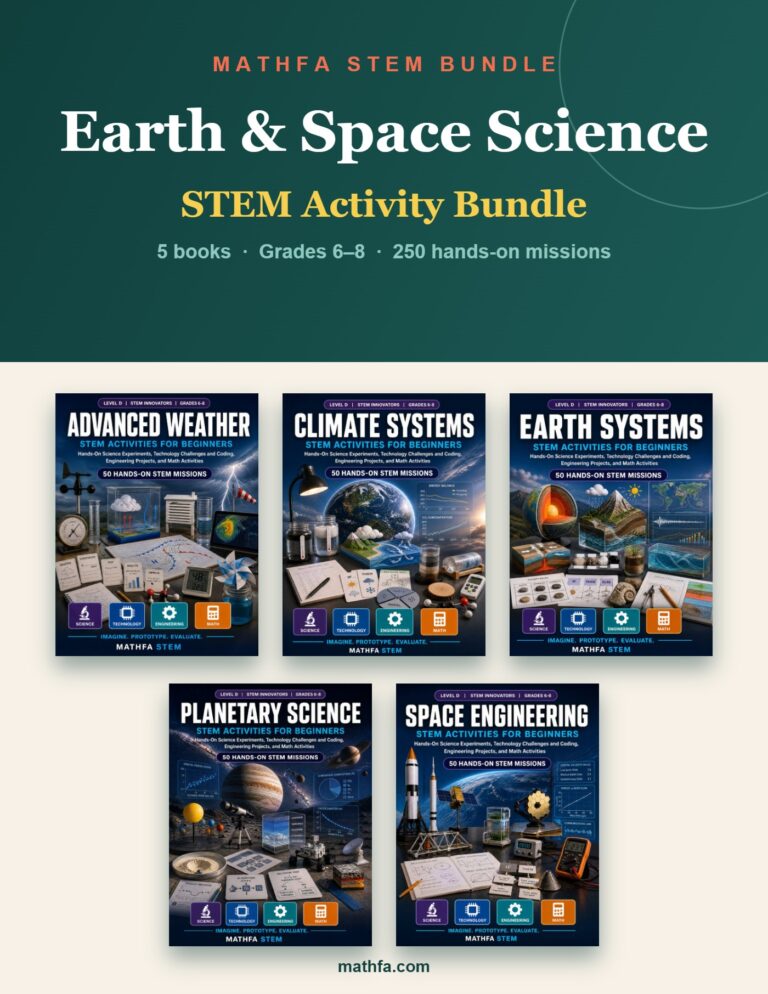
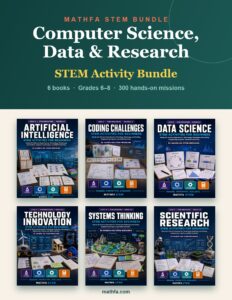
This book is part of a bundle
Computer Science, Data & Research STEM Bundle
Get all 6 books and save 31%.
Original price was: $113.94.$78.99Current price is: $78.99.
Reviews
There are no reviews yet.